
What are Casement Windows?
A casement window is a window that is hinged at the side or the top and opens inwards or outwards. However, there are instances where they don't open and this is known as a dummy sash or mock sash. This is used to match the appearance of a casement window that does open. This is what a casement window looks like:
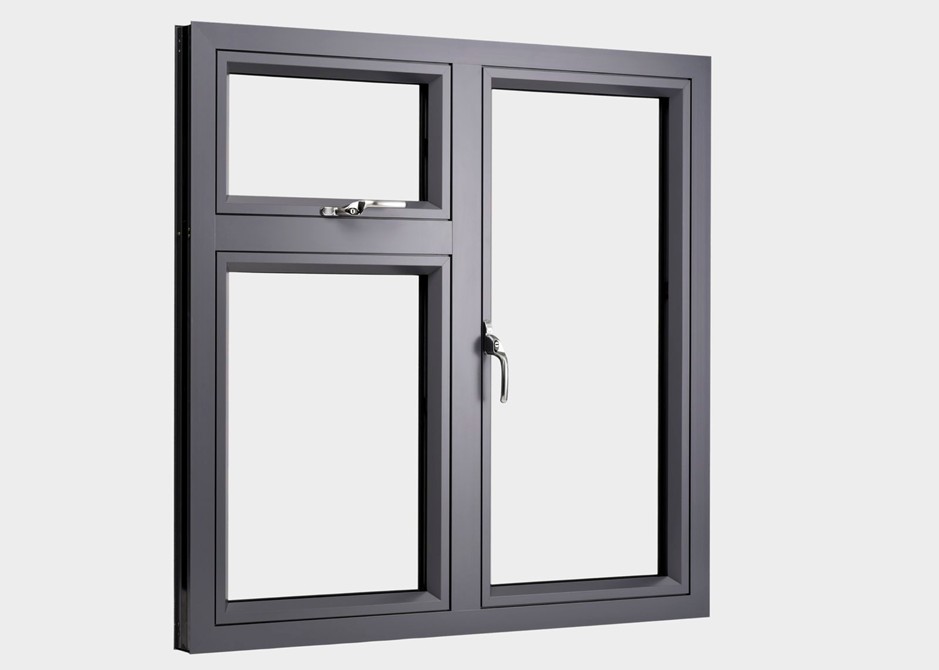
Casement windows that are hinged at the top are sometimes called awning windows and are ideal for letting in fresh air, even while it's raining. Origin Casement Windows can either be hinged at the side or the top and open outwards.
How do casement windows compare to other windows?
Find your local installer today to bring your vision to life
Other types of window include: sash windows, gable windows, French windows and bay windows. The main difference between types of windows is how they open, how they look and what type of space (known as an aperture) they fit into.
Casement windows vs sash windows
Casement windows hinge open, meanwhile, sashes slide. Also known as double hung windows, sash windows comprise of two window pane units and using a crank mechanism, one pane will slide vertically over the other to open. One or both panels can slide. Traditional timber sash windows can contribute to air leakage and heat loss due to incomplete seals, but a modern style is much more thermally efficient.
Casement vs awning (top hung casement)
Awning windows are also called a top hung casement. They are similar to traditional windows, but are hinged at the top rather than the side. An awning window can be partially opened to allow ventilation, even when it is raining.
Casement windows vs tilt and turn windows
Tilt and turn windows give you two opening options. Similar to casement windows, they open on a hinge, but they can switch between two modes of opening, depending on how far you turn the handle. Tilt mode (when the handle is turned 180°) allows the window to hinge at the bottom, slightly opening it inwards at the top. However, when turning the handle just 90°, the window opens like a side-hung casement. While similar to casement windows, they have additional functionality, making ventilating a room simple and secure.
Configuration options
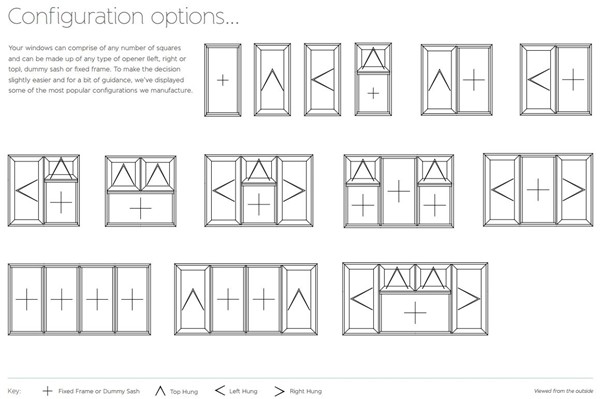
Types of casement window:
Side hung
A window hinged to the side of the frame that opens in or out.
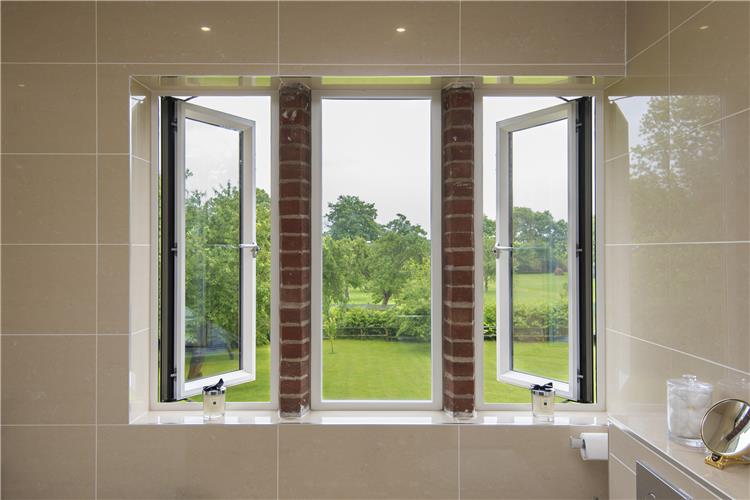
Top hung
A window hinged to the top of the frame that opens in or out, normally out.
Single frame casement windows
A single casement window is just made up of one opening pane. It can have the hinge on the top or the side of the window and naturally doesn't feature mullions or transoms (the horizontal or vertical bar separating window sashes).
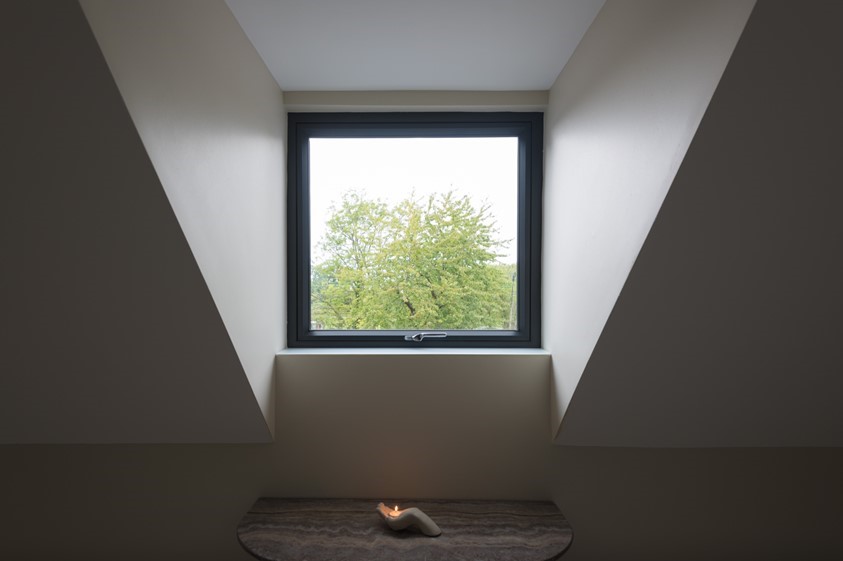
Double Frame or French Casement Windows
Double frame casement windows and French windows can look similar when closed, but the key difference is noticeable when they open. French windows feature a floating mullion which travels with one of sashes, instead of remaining centrally fixed. This creates a wider and uninterrupted opening. However, double casement windows are more versatile as the two casements don't just have to be a left opener and a right opening window – for example, it could have one side hung and a top hung or dummy sash next to it.
Compare French vs casement windows
Flush Casement Windows
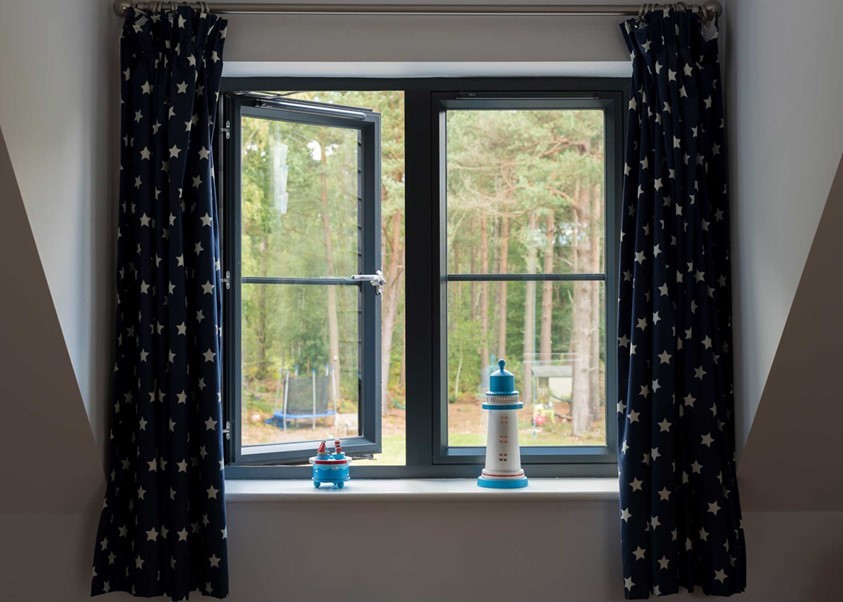
Flush casement windows are just a design, but are very popular because they provide an elegant finish. This is where the window frame and the casement are flush with each other, meaning your window has a level profile and clean appearance. Aluminium and timber windows can usually achieve this, but typically uPVC can't and its profile protrudes over the frame, which can make it look bulky.
Fixed - Casement Picture Window
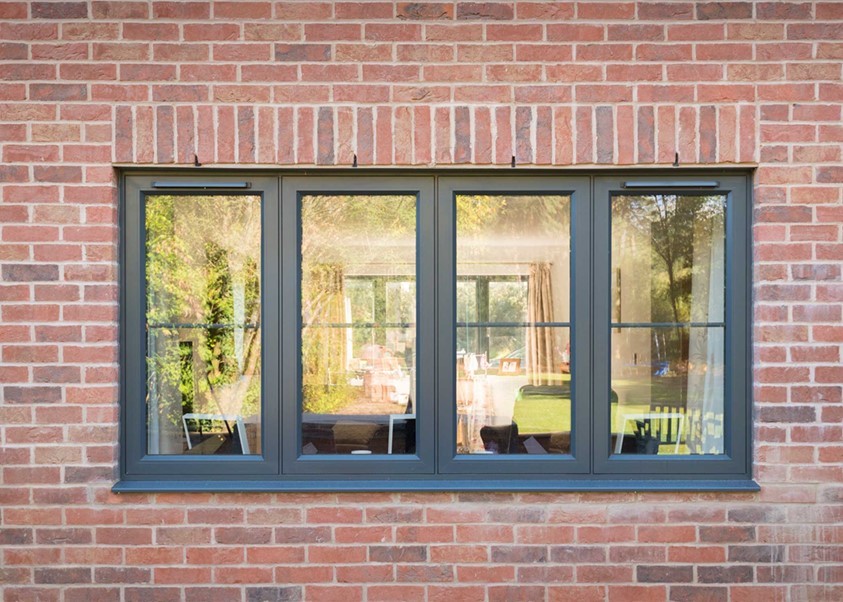
A fixed frame or dummy sash is a casement window that doesn't open. Some fixed casement windows will have mock sashes so that they fit in with the style of other windows that do open, whereas a picture window does not open and usually does not resemble an opening casement. They are ideal for unobstructed views of the outdoors and usually have slimmer profile than a casement as it's just the frame.
Mock sash
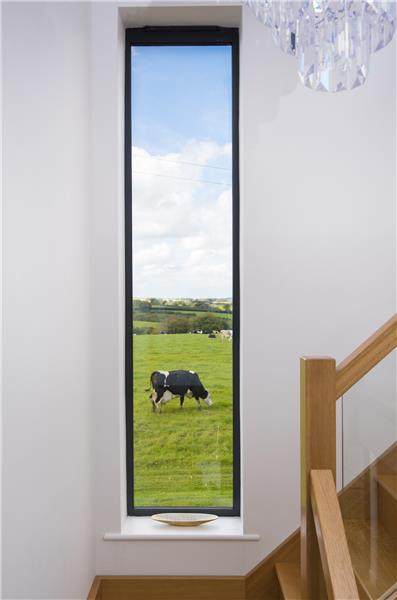
A mock sash is a window that doesn't open, but maintains the appearance of the opening casements.
Casement Window Styles:
Traditional
Traditional casement windows can be used to achieve a more rustic look, allowing them to be in keeping with a period property. Glazing bars are available for maintaining all the benefits of modern windows without compromising character.
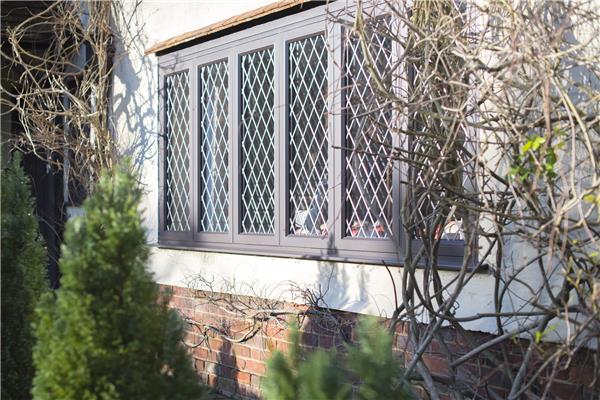
To see how Origin Windows can fit into a traditional home, take a look at this case study.
Modern
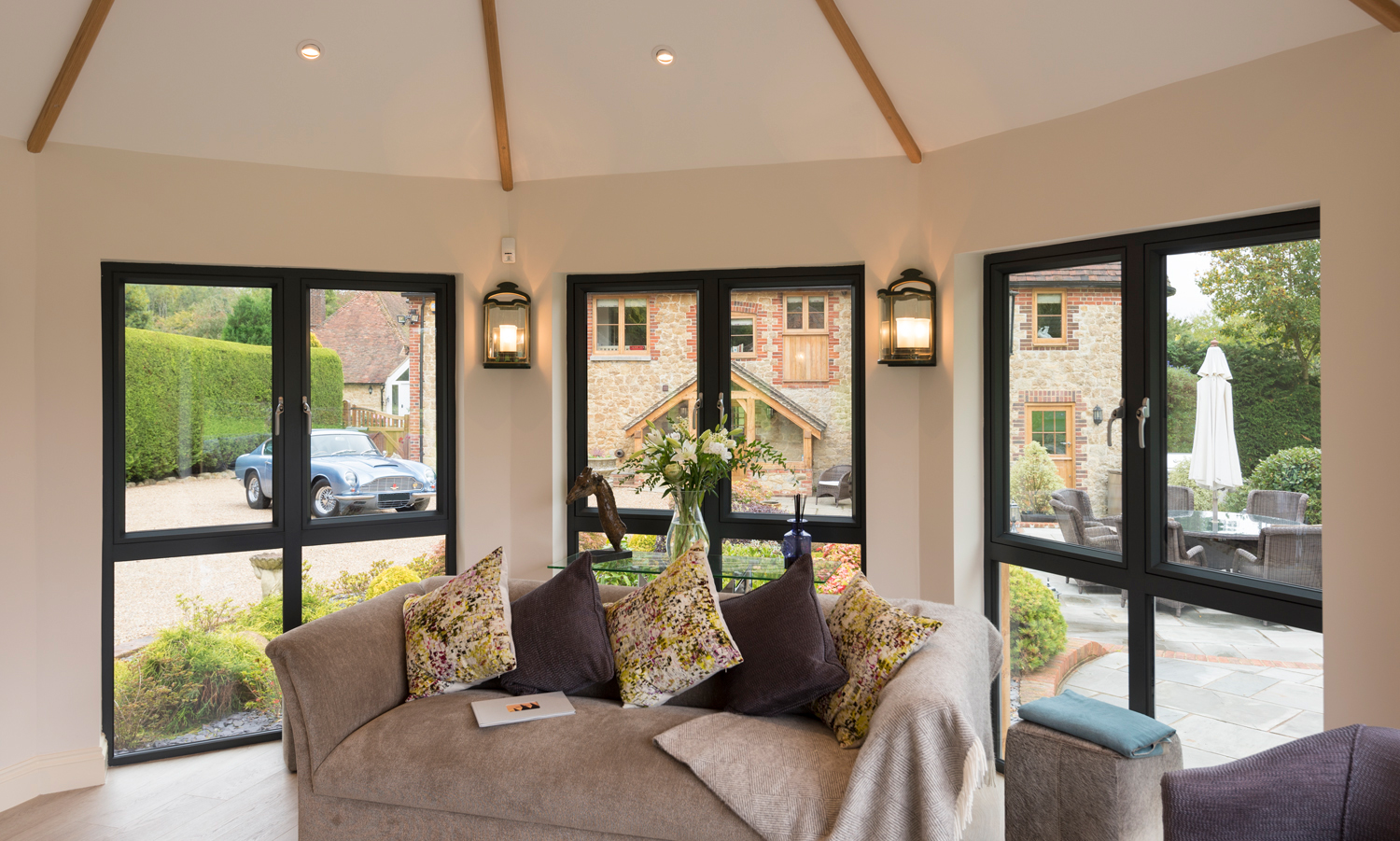
Modern casement windows tend to be designed without any glazing bars to maximise the gallery-like view out of the window. Most modern casement windows have aluminium or timber frames. The Origin Casement Window is a perfect product if you are looking for an elegant design that benefits from the latest window engineering and technology. View the Gallery style for inspiration.
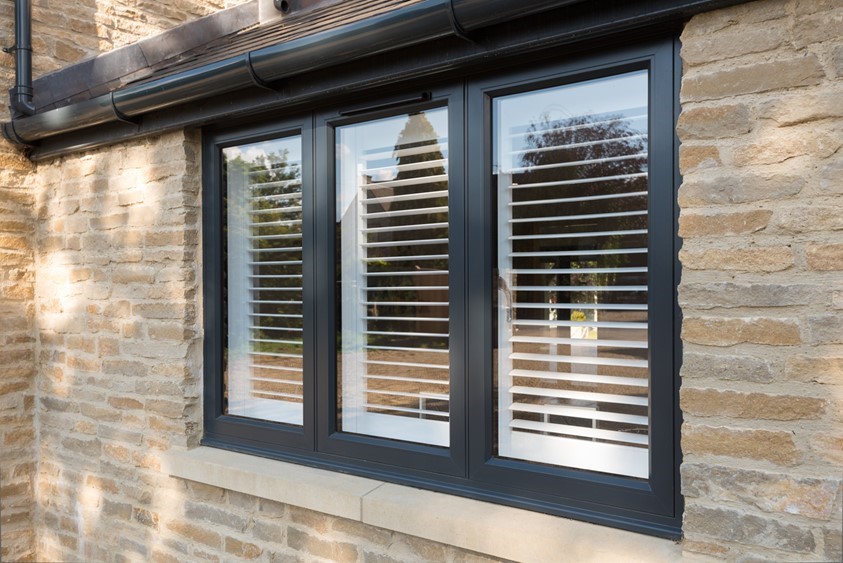
Industrial-inspired Soho Style
Aluminium casement windows with horizontal true glazing divides can create a striking industrial-inspired look. This creates a strong design statement for both contemporary or heritage homes. They are available with slim profiles for minimal obstruction of your outdoor view or natural light.

Georgian-style casement windows
Traditional Georgian-style windows are sash or casement windows. You can imitate the style of a Georgian window with their grid pattern created using glazing bars. You can choose from superficial astragal bars or steel bead on the glass to create an authentic heritage look.

Bespoke casement windows
Origin can manufacture a window to your needs by customising the size, style, finish, configuration and hardware, so you don't have to compromise on your vision. We have an extensive range of colours and finishes.
What sizes are available?
Origin Windows are custom made to your requirements and are therefore available in a wide range of sizes and configurations to suit your needs and your space. On the OW80, each individual casement window sash can be made up to 1000mm wide x 1800mm tall on side hung windows, and up to 1500mm x 1500mm on top hung windows. We can work with you to fit your windows into unusual openings, and our windows are compatible with a range of glazing options.
Colours
Origin Casement Windows are available in over 150 RAL colours, so you can ensure your windows complement the rest of your home. From contemporary greys and blacks through to textured or dual-coloured options, you will be able to find the perfect fit. Take a look at our colour guide.
Origin Casement Windows – what's on offer?
- Thermal efficiency including Aerogel
Origin Casement Windows are fitted with a bespoke thermal break that drastically reduces air flow through the system. On the OW80, it can also be specified with innovative Aerogel technology. Aerogel has the lowest thermal conductivity of any known solid material and is used to insulate space shuttles and space suits. Its unrivalled efficiency means that the Origin Window can deliver an Energy Rating of A++ and reach a U-Value of 0.8 W/m²K.
- Powdercoated finish available in over 150 different colours
Our window frames are available in a wide variety of colours including dual colour options. All our frames are powder-coated in-house to achieve an unrivalled, flawless finish.
- Internal and external frames that are flush and won't protrude
Origin Windows are designed in a way whereby the frames do not protrude, but will sit flush with the casement, delivering a clean design. The OW80 features an industry-unique internal and external flush casement, whilst the OW70 has an external flush casement.
- Excellent security features
Origin Windows feature multipoint locks and are extremely secure. They are supplied with the highest-grade stainless-steel hinges that can carry very heavy loads and surpass the standardised 50,000 cycle test required for residential windows. Hinge guards are also installed to both protect the hinges and to block intruders from jemmying the window open along the hinged side, further securing your home.
Other features include multi-point locks, impenetrable crimped frames and locking handles for peace of mind on home security.
- Up to a 20-year guarantee on parts
Because of the quality of our product, we can offer a guarantee of up to 20-years on parts on all our windows.
- Incredibly strong, aluminium frames
Our frames are made from premium grade aluminium, which is considerably stronger and more durable than other materials and lower-quality aluminium. It's also 67% lighter than steel. Origin's powdercoated aluminium is resistant to flexing, warping or corroding in variable weather conditions.
Frequently Asked Questions
What safety features do Origin Casement Windows have?
The windows satisfy all Building Regulations for emergency exits and restricted openings. Side hung or top hung casement windows can be designed to function as emergency exit windows, meeting minimum width and height required to comply with Building Regulations. All windows can be fitted with opening restrictors for additional safety.
Are casement windows more energy efficient?
Modern casement windows can achieve a high level of energy efficiency, especially with triple glazing. In fact, the Origin OW80 Window with Aerogel can achieve a U-Value as low as 0.8W/m2K. The thermal performance of your windows depends on the material, quality and the glass used, rather than the style of window.
Which casement windows are the most soundproof?
High quality windows with weatherproof seals and locks will likely reduce noise pollution. However, if you live in a noisy area, triple glazing or acoustic glass drastically improves soundproofing.
Are the windows weatherproof?
Origin Windows are designed to withstand the harshest of weather conditions. The multi-point locks used in the OW70 and OW80 not only offer excellent security, but also provide a weather-tight seal to ensure your windows are fully weatherproof and help improve thermal efficiency.
What type of material is best for casement windows?
Casement windows are available in aluminium, uPVC, timber, composite (which is a mixture of materials) and steel. The type of material you choose affects the price, durability, and strength of your windows, as well as how much maintenance is required. Find out why we favour aluminium as the best material for window frames here.


