
Tilt and turn windows have become increasingly popular with homeowners who want more control over ventilation, easier cleaning and a clean, contemporary finish. Unlike a traditional outward-opening casement window, a tilt and turn window opens in two ways: it can tilt inwards from the top for controlled airflow, or open fully inwards from the side for a wide opening.
This dual function can make tilt and turn windows an excellent choice for modern homes, apartments, upper floors and rooms where secure ventilation matters. However, because the design relies on more advanced hardware, product quality and installation standards are especially important. Choosing a premium aluminium system such as Origin’s Tilt and Turn Window can help reduce common issues associated with lower-quality products, such as sash drop and misalignment.
"Well-manufactured aluminium tilt and turn windows can perform reliably for decades with minimal intervention. Origin designs and manufactures in-house using only premium-grade aluminium. Having complete end-to-end control over the whole process is why we can offer an industry-leading guarantee."
- Harry Ingram, Head of Research and Development at Origin
Click on one of the sections below to learn more:
Their unique design offers secure ventilation and maximum airflow in the same window.
The dual functionality can be practical for easy cleaning and offer flexible ventilation options. It is a safe choice for those with small children.
You should consider the clear space for the window to open inwards fully and the more complex hardware.
Sash or standard casement windows offer a single opening function with less flexibility.
Enhance thermal performance, noise reduction and the look of your home with modern bespoke aluminium windows from Origin.
What are tilt and turn windows?
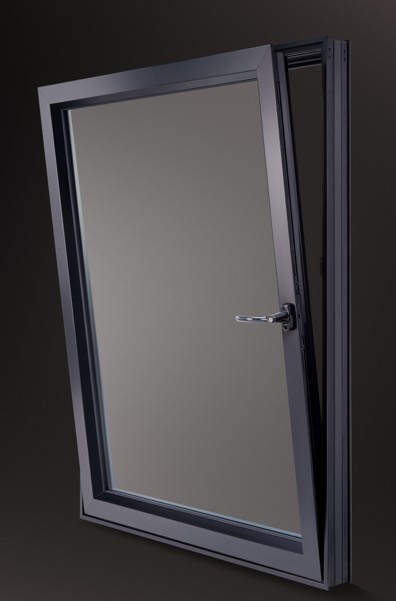
Tilt and turn windows are a window type which offer a dual opening function. In tilt mode, the top of the sash angles gently into the room while the bottom remains fixed, creating a restricted opening for secure ventilation. In turn mode, the sash opens fully inwards from the side, giving you a much wider opening for access, cleaning or increased airflow.
Explore out Tilt and Turn Windows for more information.
Key benefits of tilt and turn windows
Improved ventilation options
One of the biggest advantages of tilt and turn windows is ventilation control. The tilt position lets fresh air enter from above without needing to open the window fully, which is useful when you want airflow while keeping the opening restricted. This means it is a good system to have if you need to ventilate a room and have small children in the home.
Easy cleaning and low maintenance
On the turn function, because the sash opens inwards, the external face of the glass is easier to reach as it’s inside the property. This can be particularly helpful for upper floors, flats and townhouses where outside access can be challenging. Origin’s aluminium windows also have low maintenance requirements, giving you one less thing to worry about.
Security and comfort
Tilt and turn windows are also ultra-secure: Origin’s aluminium windows feature multi-point locking systems, tight compression seals and enhanced security features . It’s also designed to maximise thermal efficiency and noise reduction for a more comfortable indoor environment.
Important considerations and possible drawbacks
Design complexity comes with cost and installation considerations
Tilt and turn windows use more sophisticated hardware than a standard casement window. This means that they can cost more and require expert installation. Our Tilt and Turn Windows are designed for smooth and effortless operation.
"Origin systems are designed to feel balanced and smooth, even at larger sizes."
- Harry Ingram, Head of Research and Development at Origin
Is the price for tilt and turn windows worth it?
For many homes, yes. The value comes through the combination of ventilation, access, security, thermal performance and long-term usability. Traditional window styles such as casement or sash windows can be suitable if you just need a standard opening function without the added flexibility.
Correct operation matters
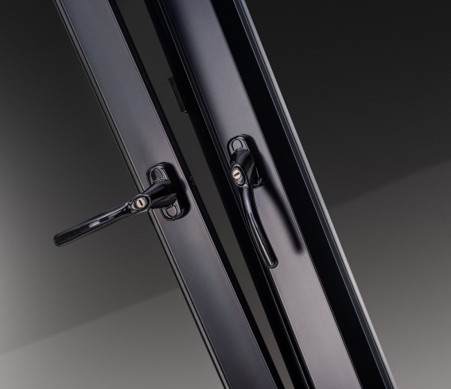
The design makes operation intuitive. When the handle is turned to at 90°, it enables tilt mode whilst turning vertically at 180°, the window can be fully opened inwards. However, it’s important to ensure the correct mode has been engaged before opening or closing the window. Forcing the mechanism can result in damage and prevent the system working as intended. You can read more about common problems and troubleshooting here.
Allow room for inward opening
The main practical consideration is internal clearance. Because tilt and turn windows open inwards, the area around the window should be kept reasonably clear, particularly when using the turn function. You may also want to consider external or integrated blinds as curtains may obstruct the window’s opening.
Comparing tilt and turn windows to casement and traditional styles
Tilt and turn vs casement windows
Casement windows are ideal if you want straightforward outward-opening applications. They can be top hung (opening from the bottom) or side hung (opening from the side) and can be fitted with opening restrictors for secure ventilation. Casement windows require external clearance, so cleaning them may be more difficult in comparison to tilt and turn windows.
Tilt and turn windows are often better where secure ventilation or easy cleaning are priorities. They are especially useful for upper floors, flats and high rises. Because they open inwards, they don’t need external clearance and this makes them ideal for Juliet balconies or areas with minimal external space.
Tilt and turn vs sash windows
Sash windows can suit period properties and areas with limited inward or outward swing space, though tilt and turn windows can often be in larger sizes and achieve better performance values.
High-quality aluminium Tilt and Turn Windows by Origin
Origin manufactures reliable and high-quality Tilt and Turn Windows at our Buckinghamshire facility. By exclusively manufacturing in the UK in our own premises, we retain complete control over design, engineering, production and quality. Every window undergoes rigorous checks to ensure it meets our exceptionally high standards before leaving our facility. Each window is made to your bespoke requirements, including the colour, size and style. We also offer a guarantee of up to 20-years on parts for peace of mind.
Frequently asked questions
Do tilt and turn windows require special maintenance or care?
No special maintenance is usually required, but they should be used correctly and kept clean. Tilt and Turn Windows are designed and engineered to be low maintenance, so homeowners can focus on enjoying the product rather than maintaining it.
What style and design options are available for tilt and turn windows?
Origin Tilt and Turn Windows are made bespoke and can be specified in over 150 RAL options. Glazing bars can be added to create a heritage-inspired look without compromising modern functionality.
Do tilt and turn windows break easily?
High-quality tilt and turn windows should not break or malfunction easily. Origin manufactures using premium aluminium and precision engineering, as well as undertaking extensive quality checks for an exceptional finish and long-term performance.
How long do tilt and turn windows last?
With the right product, installation and care, aluminium tilt and turn windows are designed for long-term performance. This is why Origin offers a guarantee of up to 20-years on parts.
Do tilt and turn windows count as fire escape windows?
Yes, if they meet the size requirements for egress windows (0.33m2) and are located a safe distance from the ground (up to 4.5m). Origin’s Tilt and Turn Windows can be specified up to 7m2, making them a practical choice for protecting your family in case of an emergency.