
Tilt and turn windows are chosen for their flexible dual opening function, controlled ventilation, secure performance and ease of use. Unlike a standard casement or sash window, one handle controls whether the window is closed, or if it is in tilt or turn mode.
This guide explains how the mechanism works, what the main components do, how it achieves a high level of security, why material and hardware quality matter, and what to do if common operational problems occur.
Click on one of the sections below to learn more:
Understanding Tilt and Turn Window Mechanisms
Tilt and turn windows open in two ways. In tilt mode, the top of the sash opens inwards for controlled ventilation without fully opening the window. In turn mode, the sash opens fully inwards, making it easier to bring more air into the room and clean the external facing glass from inside the property.
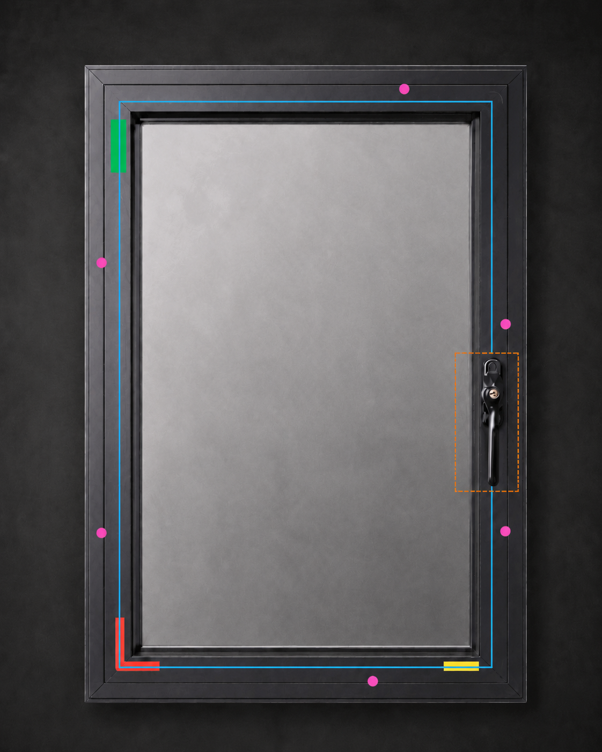
The handle and gearbox convert rotary movement into linear motion by shifting a continuous drive rod around the sash. As this rod moves, it engages or disengages cams, locking pins, keeps and pivot points, and this allows the window to lock securely, tilt safely or open fully.
How Tilt Function Operates
When the handle is turned down, the window is locked. Turning the handle 90° so it sits horizontally enables the tilt function. Most cams and keeps disengage while the bottom pivot point remains connected, allowing the top of the window to tilt open. A stay arm restricts the opening for safe ventilation.
How Turn Function Works
When the handle is turned 180° and points upwards, turn mode is selected. The locking cams disengage from the keeps and the bottom corner hinge pivots vertically, and this allows the sash to swing open. The corner hinge supports most of the sash weight, while the stay arm helps establish the vertical pivot axis.
Components of Tilt and Turn Windows
The main components work together to control movement, locking and alignment.
- The handle and gearbox select the opening mode and converts rotary into linear movement.
- Drive rods and corner drives transfer movement around the sash.
- Locking cams engage with keeps on the outer frame to secure the sash when closed and ensure a tight seal.
- The bottom corner hinge carries most of the sash weight and opens in two directions.
- The top stay restricts the tilt opening and helps align the turn function.
- The bottom tilt point keeps the sash located during tilt mode and disconnects in turn mode.
The handle has three key positions: downwards at 0 degrees locks the window, horizontal at 90° for tilt mode, and upwards at 180° for turn mode. In the locked position, the cams and keeps engage, and the gaskets compress for weather, temperature and sound insulation.
Security and Safety Features
The level of security is determined by the system as a whole, not just the locks or the glazing. Tilt and turn windows engage at multiple points around the sash, securing the window more evenly than a single locking point and making it harder to jemmy the frame.
Premium quality aluminium provides greater rigidity compared to more flexible options such as low-grade uPVC which can lead to misalignment over time. Also, the design supports reliable long-term operation which reduces the chance of sash drop and other common problems.
Other security features include the stay arm which limits the amount that the window can open in tilt mode. This can be particularly practical for households with young children or pets. The inward-opening turn function can also make cleaning safer because the external facing glass can be accessed from inside the property, making it a good choice when used on upper floors.
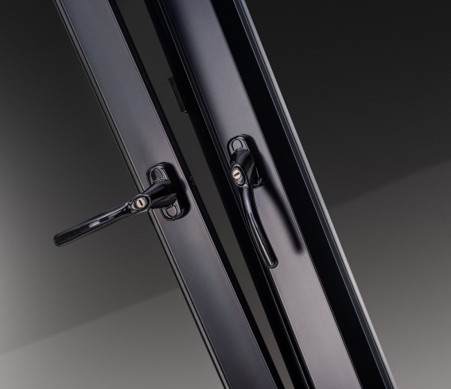
Handle security also matters. A well-engineered handle should shift between modes smoothly, not feel too loose or tight and give clear feedback as it moves into position. The choice of glazing also plays a key role; toughened or laminated glass can provide greater peace of mind.
The importance of quality hardware and materials
Because tilt and turn windows have two opening functions, they can seem more complex than standard hinged casement windows. In practice, reliability depends on the quality of the frame, hardware, engineering and installation. A well-made system should feel controlled, balanced and easy to operate.
Material choice has a significant effect on long-term performance. The frame material must support the weight and function of the window. If it flexes or distorts, the hardware may not align properly, which can compromise operation and locking. Aluminium is strong yet lightweight, so it offers the rigidity needed to support precision mechanisms while allowing slim sightlines and accommodating larger sizes.
By design, tilt and turn windows feature multiple points of locking, but not all systems offer the same security features. When comparing options, look for durable materials and hardware and features such as mechanically crimped frames and hinge guards to make it significantly harder to gain access to the home from the outside.
Read the full article discussing tilt and turn window security
Solving Common Tilt and Turn Window Problems
Most operational issues come from incorrect handle positions rather than faults. Always make sure the sash is fully closed before turning the handle, and never force the handle or sash if it is not moving naturally. Explore some common questions and fixes for tilt and turn windows below.
1. A tilt and turn window will not open in the tilt position
Bring the sash back into the frame, return the handle to the closed position and try again. If the problem continues, contact the installer so the alignment and hardware can be checked.
2. You cannot close the window
The handle may have been turned before the sash was fully seated in the frame. Gently reset the handle to the position the window is currently in, whether tilt or turn. Once the sash sits comfortably within the frame, turn the handle to lock it. Do not push or pull aggressively as this could strain the mechanism.
3. The window is stuck between opening modes
A half-tilt, half-turn position usually happens when the handle is turned while the sash is not fully closed. This is often described as handle mis-sequencing. In many cases, the window is not broken, but the mechanism needs to be reset carefully. Keep the sash supported, move it back into the frame, then return the handle to the closed position before trying to operate it again. If there is resistance, do not force it and contact your installer.
4. Do tilt and turn windows require more maintenance?
Maintenance is usually straightforward. Keep hinges and visible hardware clear of dust and contaminants, make sure the gearing is free from debris, and only turn the handle when the sash is properly positioned. If the window still does not function properly after gentle resetting, there may be an alignment or hardware issue, so contact your chosen installer.

